
Huskee 22 Ton Log Splitter Owners Manual: A Comprehensive Guide
This manual details assembly, operation, and maintenance for Huskee 21-53053, 21-53061, and 21-53079 models, designed for both vertical and horizontal wood splitting.
Welcome to efficient wood processing! This Huskee 22-ton log splitter – models 21-53053, 21-53061, and 21-53079 – is engineered for reliable performance. It’s designed to significantly reduce the physical strain associated with traditional wood splitting methods.
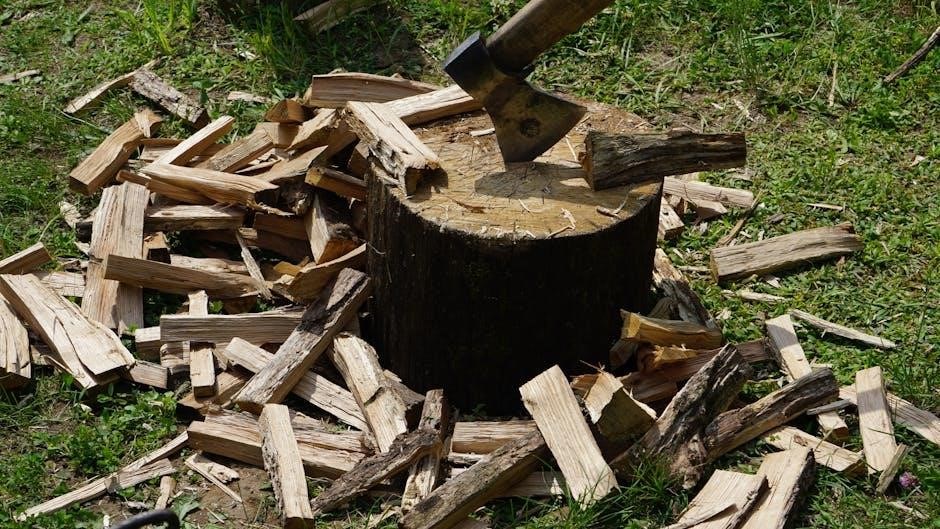
This manual serves as your comprehensive guide, covering everything from initial assembly to safe operation and routine maintenance. Understanding its features and following these instructions will ensure years of dependable service. Prepare to tackle your woodpile with ease and confidence!
Safety Precautions
Prioritize safety during operation! This log splitter generates substantial force. Always read and understand all safety rules before use. Keep bystanders, especially children and pets, a safe distance away. Wear appropriate personal protective equipment, including safety glasses and sturdy gloves.
Never operate the splitter with missing or damaged parts. Disconnect the power source before performing any maintenance. Be aware of your surroundings and maintain a firm footing. Ignoring these precautions could result in serious injury.
General Safety Rules
Always inspect the log splitter before each use, checking for loose bolts, damaged hoses, and proper fluid levels. Ensure the work area is clear and well-lit. Never operate the machine while tired or under the influence of drugs or alcohol. Maintain full control of the splitter at all times, and avoid reaching over the splitting beam.
Proper attire is crucial; avoid loose clothing and jewelry. Be mindful of potential kickback and maintain a stable stance.
Specific Safety Warnings for Log Splitters
Log splitters generate significant force; misuse can cause severe injury. Never split logs exceeding the splitter’s rated capacity. Keep hands and feet clear of the splitting area during operation. Do not attempt to split knots or twisted wood, as these can cause unpredictable splitting.
Always shut off and disconnect the power source before performing maintenance or adjustments. Never modify the log splitter in any way.
Unboxing and Assembly
Carefully unpack your Huskee log splitter, verifying all components against the parts list. Inspect for any shipping damage before assembly. Ensure the work area is level and clear of obstructions. Refer to the step-by-step instructions specific to your model – 21-53053, 21-53061, or 21-53079 – for proper assembly.
Proper assembly is crucial for safe and efficient operation; do not proceed if unsure.
Checking Package Contents
Upon receiving your Huskee log splitter, meticulously check the package contents against the included parts list; This ensures all necessary components are present before beginning assembly. Key items typically include the log splitter unit, hydraulic hoses, engine/motor, wedge, control lever, and hardware.
Document any missing or damaged parts immediately and contact customer support for replacements before proceeding with assembly.
Step-by-Step Assembly Instructions (Model Specific — 21-53053, 21-53061, 21-53079)
Begin by attaching the log splitter’s feet to the frame using the provided bolts, ensuring they are securely tightened. Next, connect the hydraulic hoses to both the pump and the cylinder, verifying proper alignment. Mount the engine/motor, carefully following the diagram, and connect the control lever.
Double-check all connections before proceeding; refer to the detailed diagrams for model-specific instructions.
Understanding the Components
The Huskee log splitter features a robust frame providing stability during operation. Its hydraulic system delivers the necessary force for efficient splitting, powered by a specified engine or motor.
The control panel houses the lever, managing splitting functions. Familiarizing yourself with each component – frame, hydraulic system, engine, and controls – is crucial for safe and effective operation. Detailed diagrams illustrate each part’s location and function.
Log Splitter Frame and Structure
The Huskee log splitter’s frame is constructed from heavy-duty steel, ensuring durability and stability during operation. This robust structure minimizes vibration and provides a secure base for splitting logs.
Key structural elements include the base, splitting beam, and log cradle. Understanding the frame’s design is vital for safe operation and proper maintenance, supporting the hydraulic ram and overall functionality.
Hydraulic System Overview

The Huskee log splitter utilizes a hydraulic system to generate the force needed for splitting wood efficiently. This system comprises a hydraulic pump, fluid reservoir, valves, and a cylinder (ram).
The pump, driven by the engine, pressurizes hydraulic fluid, which then extends the ram to split logs. Proper fluid levels and regular checks are crucial for optimal performance and longevity of the hydraulic components.
Engine/Motor Specifications
The Huskee 22-ton log splitter is powered by a robust engine designed for demanding tasks. Typically, these models feature a gasoline-powered engine with specifications including displacement around 225cc, offering sufficient power for consistent operation.
Regular engine maintenance, such as oil changes and air filter cleaning, is vital. Ensure the correct fuel type is used to maintain optimal performance and extend the engine’s lifespan.
Control Panel and Lever Functions
The Huskee log splitter’s control panel houses essential functions for safe and efficient operation. The primary lever initiates the hydraulic cylinder, driving the splitting wedge. Familiarize yourself with the return valve, used to retract the cylinder, and the auto-cycle feature, if equipped, for rapid splitting.
Always ensure a firm grip and understand each control’s purpose before operation to prevent accidents and maximize productivity.
Operating Instructions
Before starting, ensure the work area is clear and safe. Begin by starting the engine/motor according to the manufacturer’s instructions. The Huskee log splitter offers both vertical and horizontal splitting modes; select the appropriate configuration based on log size and preference.
Always maintain a safe distance during operation and never place hands or feet near the splitting wedge while in motion.
Starting the Log Splitter
Prior to starting, verify the hydraulic fluid level and ensure all safety guards are in place. Turn the ignition key to the “on” position and allow the engine to warm up briefly. Engage the throttle and pull the starter cord (if applicable) until the engine starts.
Let the engine run for a few minutes to circulate oil before operating the splitter. Always follow the engine manufacturer’s starting procedures.
Vertical Splitting Mode
For vertical splitting, position the log securely on the splitter’s base plate, centered beneath the splitting wedge. Firmly grasp the control lever and initiate the splitting cycle. Maintain a safe distance from the wedge during operation.
Allow the ram to fully retract before removing the split wood and loading another log. Never reach over or around the splitting wedge while the machine is running.
Horizontal Splitting Mode
To switch to horizontal splitting, rotate the log splitter into the appropriate position, ensuring it’s stable and secure. Place the log against the horizontal splitting wedge, maintaining a firm grip and safe distance.
Activate the control lever to initiate the split, allowing the wedge to drive through the wood. Always wait for complete retraction before handling split pieces, prioritizing safety at all times.
Log Splitting Techniques
Effective log splitting requires selecting appropriate wood and positioning it correctly. Prioritize straight, manageable logs free of excessive knots or twisting grain. Optimal positioning involves centering the log on the splitter’s wedge, ensuring even force distribution.
Hardwood demands more force than softwood; adjust your approach accordingly. Always split along the natural grain to minimize effort and prevent unwanted fracturing, maximizing efficiency.

Selecting the Right Logs
Prioritize logs that are relatively straight and manageable in size for safe and efficient splitting. Avoid logs with significant knots, deep cracks, or excessive twisting, as these can be unpredictable and dangerous. Look for wood with a consistent grain pattern.
Logs should be within the recommended diameter range for your Huskee splitter to ensure optimal performance and prevent damage to the machine. Consider the wood type – hardwood requires more force.
Optimal Log Positioning
Center the log on the splitting wedge to ensure even force distribution and prevent off-center splits. For vertical splitting, ensure the log is firmly supported by the splitter’s base. When using horizontal mode, secure the log to prevent rolling or movement during the splitting process.
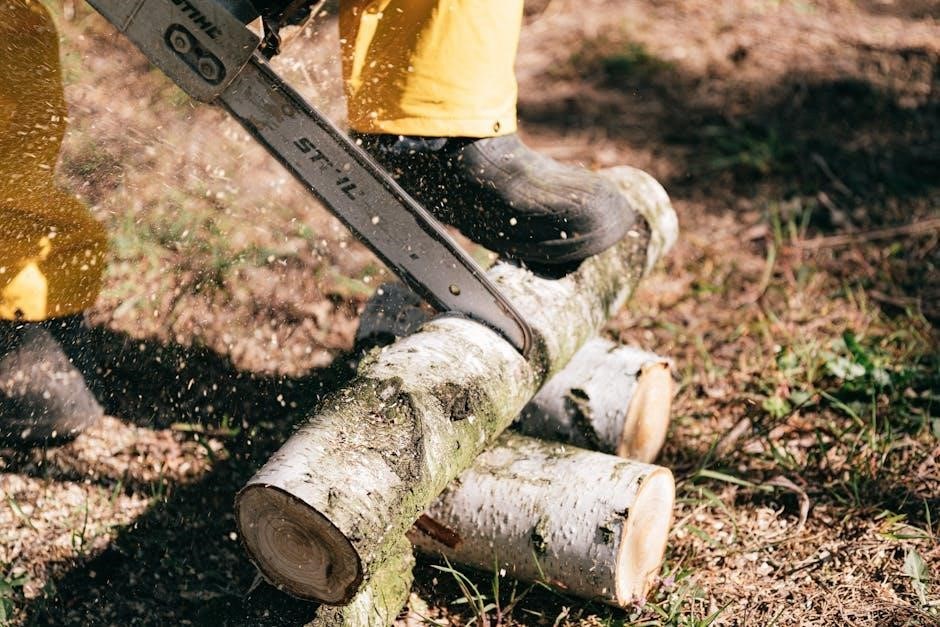
Avoid positioning logs at an angle, as this can lead to uneven splits and potential kickback. Always maintain a safe distance from the splitting area.
Splitting Hardwood vs. Softwood
Hardwoods, like oak and maple, require more force to split due to their density and grain structure. Position these logs centrally on the wedge and utilize the full power of the 22-ton splitter. Softwoods, such as pine and fir, split more easily and may require less force.
Adjust splitting force accordingly to avoid over-splitting. Always prioritize safety when handling any wood type.
Maintenance and Troubleshooting
Regular maintenance ensures optimal performance and extends the lifespan of your Huskee log splitter. This includes adhering to a scheduled maintenance plan, checking hydraulic fluid levels, and performing engine/motor upkeep. Common issues, like slow operation, can often be resolved by checking fluid levels or air filters.
Consult the manual for detailed troubleshooting steps and preventative measures.
Regular Maintenance Schedule
To maintain peak performance, implement a consistent maintenance schedule. Before each use, inspect for loose bolts and damaged parts. After every 50 hours of operation, check and top off hydraulic fluid levels. Annually, change the hydraulic fluid and air filter.
Regularly inspect the engine/motor for wear and tear, and follow the engine manufacturer’s maintenance guidelines for oil changes and spark plug replacement.
Hydraulic Fluid Checks and Changes
Maintaining proper hydraulic fluid levels is crucial for optimal performance. Check the fluid level before each use, ensuring it’s within the designated range on the reservoir. Inspect for leaks around hoses, fittings, and the pump.
Change the hydraulic fluid annually, or after 200 operating hours, using the manufacturer’s recommended fluid type. Properly dispose of used fluid according to local regulations.
Engine/Motor Maintenance
Regular engine maintenance ensures reliable operation. Check the engine oil level before each use and add oil as needed, using the specified grade. Inspect the air filter regularly, cleaning or replacing it to maintain proper airflow.
Periodically check the spark plug, cleaning or replacing it as necessary. Follow the engine manufacturer’s recommendations for fuel stabilizer use during storage to prevent fuel degradation.
Common Problems and Solutions
If the log splitter doesn’t start, check the fuel level, spark plug, and ensure the engine switch is on. Slow splitting may indicate low hydraulic fluid or a clogged filter – check and replace as needed.
For leaks, inspect all hydraulic connections and hoses, tightening or replacing damaged components. If the ram doesn’t fully extend, bleed the hydraulic system following the instructions in this manual.
Parts Diagram and Replacement
A detailed parts diagram is essential for identifying components when ordering replacements. Locate parts using the diagram, noting the part number for accurate ordering. Replacement parts can be obtained through authorized Huskee dealers or online retailers.
Ensure compatibility with your specific model (21-53053, 21-53061, or 21-53079) before purchasing. Always refer to this manual for proper installation procedures to maintain safety and functionality.
Locating Parts in the Diagram
The parts diagram visually represents the Huskee log splitter’s assembly. Each component is labeled with a unique part number and a descriptive name. Begin by identifying the general area of the part you need – frame, hydraulic system, or engine.
Trace the lines from the component to its corresponding label on the diagram. Carefully note the part number; this is crucial for accurate replacement ordering.
Ordering Replacement Parts
To order replacement parts, have the model number (21-53053, 21-53061, or 21-53079) and the specific part number readily available. Contact your local Huskee dealer or visit the manufacturer’s website for authorized parts distributors.
Ensure accurate part numbers to avoid delays and incorrect shipments. When ordering, specify the quantity needed and provide your contact information for delivery.
Storage and Transportation
Proper storage is crucial for longevity. Park the Huskee log splitter on a level surface, ideally indoors or under a protective cover, away from extreme weather.
Before transportation, ensure the engine is off and cooled. Securely fasten the unit to a trailer or truck bed to prevent shifting during transit. Always follow local regulations for towing and load securement.
Proper Storage Procedures
To maximize the lifespan of your Huskee log splitter, store it on a level, dry surface, shielded from the elements. Clean any debris or wood chips from the machine before storage.
Disconnect the spark plug wire to prevent accidental starting. Consider applying a corrosion inhibitor to metal parts. If storing for extended periods, stabilize the fuel or drain the tank completely to avoid fuel degradation.
Safe Transportation Guidelines
When transporting your Huskee log splitter, ensure the engine is off and cooled completely. Securely fasten the unit to a trailer or truck bed using appropriate straps or tie-downs, preventing shifting during transit.
Drain the fuel tank or use a fuel shut-off valve to prevent spills. Protect the control panel and hydraulic lines from damage. Always adhere to local transportation regulations and weight limits.
Warranty Information
This Huskee log splitter is covered by a manufacturer’s warranty against defects in materials and workmanship for a specified period from the date of purchase.
Warranty coverage details, including duration and limitations, are outlined in the separate warranty document included with your unit. To initiate a claim, contact Huskee customer support with proof of purchase and a description of the issue.
Warranty Coverage Details
The Huskee warranty typically covers defects in the log splitter’s frame, hydraulic system, and engine/motor, subject to normal use and maintenance.
It does not cover damage resulting from misuse, abuse, improper maintenance, or the use of non-approved parts. Wear items, like shear keys, are also generally excluded. Specific terms, conditions, and the warranty period are detailed in the accompanying warranty documentation.
Claim Procedures
To initiate a warranty claim, contact Huskee customer support with your model number and purchase date. You’ll likely need to provide proof of purchase and a detailed description of the defect.
Huskee may request photos or videos of the issue for assessment. Approved claims may require returning the defective part for inspection, or arranging for a qualified technician to perform repairs. Shipping costs may apply.
Technical Specifications
The Huskee 22-ton log splitter boasts robust dimensions and considerable weight for stability during operation. Hydraulic systems deliver significant pressure and flow rates, crucial for efficient splitting.
Engine or motor power output varies by model (21-53053, 21-53061, 21-53079), impacting splitting force and cycle times. Detailed specifications are found within this manual, ensuring optimal performance and safe usage.
Dimensions and Weight
The Huskee 22-ton log splitter’s overall dimensions are carefully engineered for both functionality and manageable storage. Weight is a critical factor, providing stability during operation and resisting movement while splitting logs.
Specific measurements, including length, width, and height, are detailed within this manual for each model (21-53053, 21-53061, 21-53079). Understanding these specifications aids in safe transport and proper placement during use.
Hydraulic Pressure and Flow Rate
The Huskee 22-ton log splitter relies on a robust hydraulic system to generate substantial splitting force. Optimal performance depends on maintaining the correct hydraulic pressure and flow rate, crucial for efficient operation.
This manual specifies the precise pressure (measured in PSI) and flow rate (measured in GPM) for models 21-53053, 21-53061, and 21-53079. Consistent adherence to these values ensures longevity and prevents damage to the hydraulic components.
Engine/Motor Power Output
The Huskee 22-ton log splitter’s performance is directly linked to the engine or motor’s power output. Understanding this specification is vital for optimal operation and assessing workload capacity.
This manual details the horsepower (HP) and cubic centimeter (cc) displacement for each model – 21-53053, 21-53061, and 21-53079. Proper engine maintenance, as outlined later, ensures consistent power delivery and extends the lifespan of your log splitter.
Frequently Asked Questions (FAQ)
This section addresses common inquiries regarding your Huskee 22-ton log splitter, covering operation, maintenance, and troubleshooting. Users frequently ask about hydraulic fluid types, optimal log sizes, and resolving starting issues.
We’ve compiled answers to these questions, aiming to provide quick solutions and enhance your user experience. If your question isn’t answered here, please consult the ‘Contact Information for Support’ section for further assistance and expert guidance.
Contact Information for Support
For dedicated assistance with your Huskee 22-ton log splitter, please reach out to our support team. We offer comprehensive help with assembly, operation, maintenance, and any troubleshooting needs you may encounter.
Visit our website at [insert website address here] or call our toll-free number at [insert phone number here] during business hours. Our knowledgeable representatives are ready to ensure your complete satisfaction and optimal splitter performance.


Be the first to reply